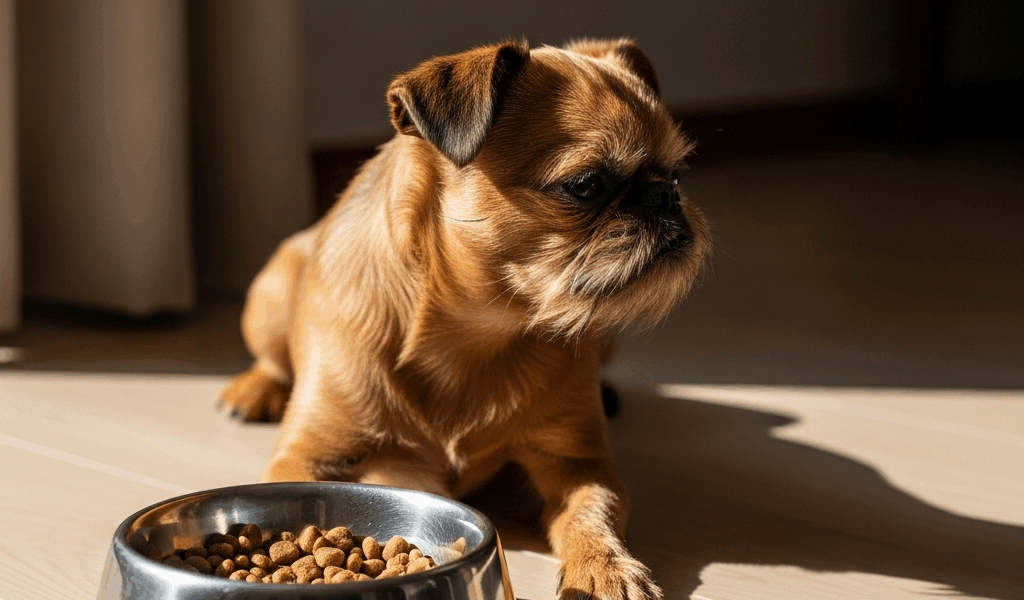
Why Brussels Griffons Skip Meals More Than Other Dogs
Brussels Griffon ownership has gotten complicated with all the conflicting advice flying around. As someone who has lived with these theatrical little dogs for years, I learned everything there is to know about their relationship with food — the hard way, mostly. Today, I will share it all with you.
So here’s the thing about Griffs and mealtime: they skip meals more deliberately than most breeds. And it usually isn’t what you think.
Three things are working against them. First, the sensitivity — almost eerie levels of it. These are dogs that notice when you change your morning routine. They notice when the couch moves. They definitely notice when their food bowl shifts two feet to the left. Not stubbornness. Genuine wiring. The kind that makes them reactive to disruptions most dogs would never register.
Second, those flat faces come with real physical trade-offs. The squished muzzle that makes them look like tiny Victorian gentlemen also means narrower airways, overcrowded teeth, and sometimes just the act of breathing while eating feels uncomfortable. Any nasal congestion or dental soreness turns mealtime into a genuine physical ordeal — not a choice.
Third, they’re velcro dogs. Separation anxiety and stress-related food refusal show up constantly in this breed. A change in your work schedule, a houseguest, even a weird shift in emotional energy at home — these things land differently in a Griff’s nervous system than they would in, say, a Labrador who’d eat rocks if you put gravy on them.
The good news: most meal-skipping in otherwise healthy, alert Griffons resolves within a day or two. You don’t need to panic. You need to triage.
Most Common Reasons a Griff Stops Eating
Ranked by actual frequency — here’s what’s usually happening when a Brussels Griffon refuses the bowl.
Stress or Anxiety
This lands at number one for a reason. A new person in the house. A travel day for you. Even rearranged furniture. Griffs eat with their emotions as much as their stomachs. That’s what makes their sensitivity so endearing to us Griffon people — until it’s 9 p.m. and nobody’s touched dinner.
Dental Pain
Brussels Griffons have massive dental problems built into their anatomy. Small skull. Normal-sized teeth. Overcrowding, misalignment, early decay — it’s almost a breed trademark. Sometimes eating just hurts. I figured this out with my own Griff, Margot, when she started picking at her kibble but demolishing soft treats without hesitation. Softer food meant less jaw pressure. That was the tell. Vet visit, tooth extraction, $340 later — problem solved.
Recent Vaccine or Medication
Dogs experience real appetite suppression after vaccines or a round of antibiotics. Usually passes in 24 to 48 hours. Worth noting in your mental timeline before you spiral.
Respiratory Discomfort
A stuffy nose makes breathing harder. Eating requires a Griff to coordinate breathing and swallowing at the same time — add congestion, and the whole process feels impossible. Watch for increased snuffling or mouth-breathing. That’s your clue.
Food Boredom or Formula Change
Sometimes a Griff just decides last week’s kibble is unacceptable today. I once switched brands — same protein source, different manufacturer — and my dog turned her nose up for three full days. Same food, essentially. Didn’t matter. Don’t make my mistake: if you switch, do it slowly and expect protest.
Nausea from Motion or Environment
Car rides upset their stomachs easily. A new environment, especially combined with existing anxiety, can trigger mild nausea that kills appetite completely. I’m apparently someone who drives too many back roads, and Margot never fully forgave me for it.
How to Tell If It Is Serious or Just Griff Drama
Probably should have opened with this section, honestly. Not eating for 12 to 24 hours while your Griff is otherwise alert, playful, and drinking water normally? That’s Griff drama. Not eating for more than 24 hours — or any meal refusal paired with the following flags? Call your vet now.
- Repeated vomiting (once or twice sometimes just means empty stomach — more than that, pay attention)
- Signs of pain — reluctance to move, whimpering, hunched posture
- Not drinking water
- Pale or inflamed gums
- Extreme lethargy or behavior that just feels off
- Diarrhea or constipation alongside the food refusal
- Visible weight loss over several days
One missed meal from an otherwise normal-acting Griff? Wait. Two or three? Watch carefully. Four or more? Make the appointment.
Step-by-Step — What to Try Before Calling the Vet
Work through these in order. Most food refusal in Brussels Griffons resolves with one or two of these. So, without further ado, let’s dive in.
Step 1: Rule Out a Recent Change
Sit down and actually think through the last 48 hours. Changed the food? Switched brands? Altered the feeding schedule? New person or pet in the house? Took the dog somewhere unusual? Overhauled your own routine? For a Griff, any of these can register as a genuine threat to stability. Naming the change — and reversing it where possible — sometimes restarts appetite within hours. Seriously. Hours.
Step 2: Inspect the Mouth
Open your Griff’s mouth during a meal refusal moment — this is useful data, not just something to do with your hands. Look for redness along the gumline, swelling, obvious decay, or a smell that wasn’t there before. Overcrowded teeth create pockets where food traps and infection quietly starts. If anything looks inflamed, that’s probably your answer — and it needs a vet, not a home remedy.
Step 3: Try Hand-Feeding or Warming the Food
Sometimes a Griff eats from your hand when they won’t touch the bowl. That tells you appetite exists — the refusal is behavioral or sensory, not physical illness. Also worth trying: warming the kibble — literally 10 seconds in the microwave with a small splash of water — to amplify the smell. Older dogs and stressed dogs respond to this more than you’d expect. It’s not a permanent fix, but it buys you information.
Step 4: Remove the Bowl and Reset
Don’t leave food down all day hoping hunger eventually wins. Brussels Griffons will use food refusal as a control mechanism — and a bowl sitting there for hours just becomes a source of stress. Put it down for 15 minutes. Nothing happens, pick it up. Try again at the next scheduled meal time. Routine is everything to a Griff — at least if you want to avoid making the anxiety worse.
Step 5: Listen to the Breathing
More congested than usual? More snuffling? Mouth-breathing between bites? Respiratory discomfort makes eating feel pointless when breathing already requires effort. A humidifier in the bedroom sometimes helps — I use a Levoit Classic 300, about $50, nothing fancy. Slightly elevated food and water bowls help too. Small adjustments, real difference.
When a Griff Stops Eating Because of Anxiety
But what is anxiety-driven food refusal in Brussels Griffons? In essence, it’s the dog’s nervous system treating perceived instability as a genuine threat. But it’s much more than that — it’s a breed-level pattern that shows up repeatedly and specifically in Griffs in ways that confuse owners who’ve had other dogs.
Frustrated by conflicting advice online, I started keeping a simple journal every time Margot refused food — date, what changed that day, how long the refusal lasted. Patterns emerged fast. Houseguest arriving? Refusal starts day one, resolves day three. Schedule change for me? She’d skip one meal, sometimes two. Furniture moved? One skipped meal, maximum. That data changed how I responded — less panic, more pattern recognition.
Here’s what actually works: keep the feeding location completely consistent. Same bowl — Margot uses a stainless shallow dish, wide enough that her face doesn’t press against the sides — same time, same spot on the kitchen floor. Feed your Griff shortly before you leave the house. A filled stomach plus the routine signal of being fed sometimes prevents the worst of the anxiety spiral from even starting. Familiar scents around the feeding area help too.
Most anxiety-related food refusal disappears the moment the stressor does. Your Griff isn’t broken. They’re wired differently. This new understanding of breed-specific anxiety took off among Griffon owners several years ago and eventually evolved into the management approach enthusiasts know and rely on today — keep the routine sacred, and most of the drama never starts.
Brussels Griffons stop eating for reasons specific to how they’re built and how they experience the world. Pay attention to what changed. Check the mouth. Rule out pain. Give it time. Most often the answer isn’t medical at all — it’s just one more reminder of why these dramatic little dogs manage to own their humans so completely.

Stay in the loop
Get the latest griffist updates delivered to your inbox.