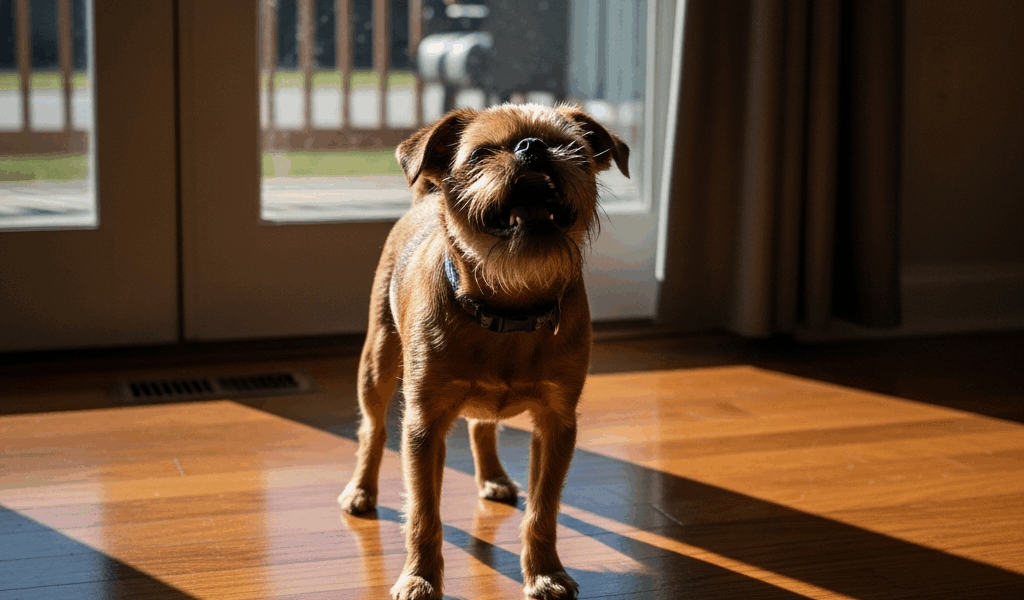
Why Brussels Griffons Bark So Much
Brussels Griffon barking has gotten complicated with all the generic dog training advice flying around. Most of it doesn’t apply here. As someone who has owned three Griffons over the past twelve years, I learned everything there is to know about this specific, maddening, deeply endearing problem. Today, I will share it all with you.
First, the thing nobody tells you upfront: these dogs sound like they weigh forty pounds. They actually weigh seven. That gap — between the sound and the source — is genuinely disorienting the first time you hear it.
But what is a Brussels Griffon barking problem, really? In essence, it’s a wiring issue, not a training failure. But it’s much more than that. It’s centuries of selective pressure showing up in your living room every time the mailman gets within a hundred feet of your door.
Frustrated by an overwhelming rat population in the stables and grain stores of 16th-century Brussels, working-class handlers developed these dogs using whatever scrappy, sharp-tempered terrier stock they had available. The job description was simple — stay alert, stay loud, stay relentless. That was somewhere around 1600. The instinct never left.
This new purpose took off across several generations and eventually evolved into the alert-first temperament enthusiasts know and occasionally lose sleep over today. A car door closing three blocks away registers as a credible threat. A single leaf skittering across the patio flagged as a potential intruder. That’s not an exaggeration. I’ve watched it happen with my current Griffon, a four-year-old named Marta, approximately forty times this month.
That’s what makes the Brussels Griffon endearing to us owners, honestly — even the exhausting parts connect back to something real. You’re not living with a broken dog. You’re living with a dog that was engineered to never stop paying attention. Understanding that changes everything about how you handle the noise.
The Four Main Reasons Your Griffon Barks
Not all Griffon barking sounds identical. The fix depends entirely on which type you’re dealing with. So, without further ado, let’s dive in.
Alert Barking — The Guard Dog Instinct
High-pitched. Rapid-fire. Aimed at windows, doors, or sounds you can’t even locate. Your Griffon is doing exactly what it was built to do: announce a potential threat. The bark usually stops once they’ve confirmed the source is gone. Usually.
Demand Barking — The “Feed Me Now” Bark
Short, pointed, and directed straight at your face during meal prep or treat time. This bark has a clear goal — get you to do something. It works, which is the entire problem. Owners respond, the dog logs the result, and suddenly you have a seven-pound creature running your kitchen schedule.
Anxiety or Separation Barking — The Panic Response
Continuous, sometimes frantic barking when you leave or when your Griffon gets isolated in another room. This isn’t communication. It’s distress management. The dog isn’t trying to tell you something specific — they’re trying to survive a feeling that overwhelms them.
Boredom Barking — The Empty-Brain Bark
Repetitive, almost rhythmic, aimed at nothing in particular. Less common in Griffons than the other three types, but it happens — especially in dogs whose alert instincts have no real target for the day.
How to Stop Alert Barking in a Brussels Griffon
Probably should have opened with this section, honestly. Alert barking is the hardest category to address because it isn’t learned behavior — it’s genetic. You won’t eliminate it. You can manage it, though, and that distinction matters.
While you won’t need a professional behaviorist or a shock collar, you will need a handful of specific tools: high-value treats (I use Zuke’s Mini Naturals, the chicken flavor, about $9 a bag), a white noise machine, and a consistent daily window of fifteen to twenty minutes for desensitization work.
Start with controlled sound exposure. Record the specific triggers your dog reacts to — doorbell, knocking, the particular thud of your mailbox closing. Play them at low volume during calm midday hours when your Griffon isn’t already running hot.
- Run the recordings at roughly 30% volume for the first week. Pair every playback with a treat or a short tug game. The goal is simple: rewire the association from “danger signal” to “good things are about to happen.”
- Increase volume gradually over three to four weeks. Don’t rush this. Jumping from 30% to 80% in one session will set you back two weeks.
- Block sightlines during peak trigger windows. If your Griffon barks at foot traffic outside the living room window between 3:00 and 5:00 PM, close the blinds at 2:55. Remove the visual input while the desensitization work builds.
- Teach the “enough” cue. Let them bark two or three times — the instinct needs some outlet — then say “enough” in a flat, matter-of-fact tone. The first half-second of silence gets a treat, immediately. Don’t wait. That window closes fast.
The first thirty seconds of any barking episode are critical. Don’t yell over the barking — your Griffon reads that as you joining the alert chorus and escalates accordingly. I’m apparently very bad at remembering this under pressure, and yelling has never once worked for me while staying quiet almost always does. Don’t make my mistake.
Toss a treat across the room the moment the barking starts. Start a game. Redirect on your terms before the behavior locks in. Two weeks of this approach, combined with consistent sightline management, moves faster than months of reactive correction.
Fixing Demand and Anxiety Barking Step by Step
For Demand Barking
- Stop responding entirely. No eye contact, no talking, no touch, no redirects. The bark should produce absolutely nothing from you — not even visible irritation.
- Reward silence instead. Wait for at least thirty consecutive seconds of quiet during a period when demand barking would normally occur. Then give them the meal, the treat, the attention. Quiet becomes the only functional strategy.
- Hold this line for a minimum of three weeks. One slip — one moment where you respond to the barking — resets a significant portion of the progress. The dog’s internal record-keeping on this is meticulous.
For Anxiety Barking
Separation anxiety in Brussels Griffons needs its own approach. The connection between alone-time tolerance and crate training is particularly important for this breed — something I’ve covered in more detail elsewhere on this site.
- Start crate work on a neutral day, not right before you need to leave. Make the crate genuinely appealing: a Kong stuffed with peanut butter ($3.49 at most pet stores), a worn t-shirt that smells like you, door left open during low-stress afternoon hours.
- Practice extremely short absences. Leave for sixty seconds. Return before anxiety has time to build. Extend duration by thirty-second increments across several weeks. This sounds absurdly slow. It works anyway.
- Run a white noise machine near their space — the LectroFan Classic runs about $45 and handles most environmental sound bleed that would otherwise trigger barking through a closed door.
- Never return while the barking is active. If you come back because they’re barking, you’ve just confirmed that barking is the mechanism that brings you home. That lesson takes months to undo.
What Not to Do When Your Griffon Barks
The breed’s sensitivity means common corrections backfire here in ways they wouldn’t with a Lab or a beagle.
Don’t yell back. Raised voice reads as alarm joining, not correction. They bark louder. You yell louder. Someone ends the night with a headache — usually you.
Don’t use their name as a correction. “No, Bruno!” teaches the dog that their name signals something bad is coming. Use a neutral sound instead — a flat “uh-uh” or a single tongue click works fine.
Don’t correct inconsistently. If barking at the mailman gets addressed on Tuesday but ignored on Thursday because you’re exhausted, no rule ever forms in the dog’s mind. Inconsistency generates anxiety. Anxiety generates more barking. The loop tightens.
Don’t expect fast results. I made this mistake badly with my first Griffon, a dog named Ellis who I adopted in 2011. Barking patterns in this breed take four to eight weeks to meaningfully shift — sometimes longer. The genetic wiring doesn’t move quickly. Stick with the approach anyway, even when it feels like nothing is working.
Brussels Griffons bark because they were specifically made to bark. Working dogs in lapdog bodies — that’s what you signed up for. Once you stop treating the barking as a character flaw and start treating it as a breed trait that needs direction rather than elimination, the whole project gets more manageable. You stop fighting the dog and start working with what the dog actually is.



Stay in the loop
Get the latest griffist updates delivered to your inbox.