
Why Brussels Griffons Are Prone to More Problems Than Most Toy Breeds
I’ve had my Brussels Griffon for going on six years now. In that time, I’ve spent more hours in vet waiting rooms than I care to admit and talked to enough other Griff owners to fill a small support group. What follows is the unfiltered version of what actually goes wrong with this breed — not the sanitized breeder pamphlet version, but the real stuff that shows up in your living room at 11 p.m. on a Tuesday.
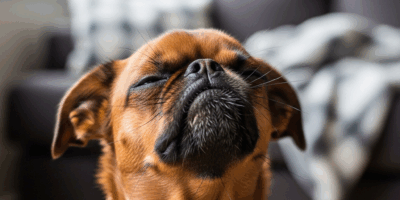
Take one look at a Brussels Griffon and you get it immediately. That compressed muzzle. The wide, almost startled dark eyes. An expression that reads as vaguely human and deeply judgmental. We love them for it. But nobody tells you at the breeder’s house that the same face is a structural compromise. Decades of intentional selection for pushed-in, wrinkled features meant everything that normally fills a standard-length snout got squeezed into roughly half the space. Airways, eyes, teeth, spinal cord — all crammed in together.
Most health problems that show up first are manageable, which is genuinely good news. But manageable only stays manageable with early action. Waiting until things look obviously bad usually means more invasive treatment, a much larger vet bill, and a dog who’s been quietly uncomfortable for months.
Breathing Issues That Look Mild but Can Escalate Quickly
Your Brussels Griffon snores. You probably think it’s adorable. I did too, for the entire first year. Wish someone had told me to pay closer attention sooner.
BOAS — brachycephalic obstructive airway syndrome — is the clinical name. The practical experience is watching your dog labor to do something every other dog does without thinking. It happens when compressed airway structures make breathing genuinely difficult, especially during exercise or heat. Way more serious than the snoring suggests.
What you notice at home comes in stages. After a 15-minute walk or a play session with a squeaky toy, your dog is breathing heavily — audible wheezing, sometimes a rattling quality. Normal recovery breathing is present but quiet. Then there’s the gagging and reverse sneezing — those sudden honking inhalations that sound like choking but pass quickly. Occasional ones? Fine. Multiple times daily, especially post-activity? Worth noting.
Blue-tinged gums or tongue after any exertion is your emergency signal. Cool the dog down immediately. Call your vet the same day, not tomorrow.
The heat trap catches a lot of owners off guard. A Griff who breathes fine at 62 degrees can hit genuine respiratory distress at 80 with humidity. Summer walks belong in the 6 a.m. window or after 8 p.m. Midday is off the table. Air conditioning isn’t a luxury for this breed. It’s infrastructure.
Panting heavily at rest, struggling to settle, any episode where you genuinely wonder if they can catch their breath — grab your phone and record it. Show your vet the video. Your at-home observations carry more diagnostic weight than a calm office visit where the dog is performing perfectly.
Eye Problems That Show Up Early in Life
Those prominent dark eyes are simultaneously the breed’s most distinctive feature and its most vulnerable anatomical point. Minimal protective bone surrounds them. The eyelids don’t fully close during sleep. They’re exposed in ways that most dog breeds simply aren’t.
The first eye issue most Griff owners encounter is squinting, or a paw going repeatedly to the face. Could be a corneal scratch, debris caught under the eyelid, or early inflammation. Here’s the part that matters: a scratch that seems trivial on Monday can ulcerate by Wednesday. Corneal ulcers in toy breeds move fast, sometimes requiring treatment within 24 to 48 hours of symptom onset. Don’t sit on this one.
Clear overnight discharge that crusts? Probably mild irritation. Thick yellow or greenish discharge? That suggests infection. Cloudy appearance to the eye itself, any visible gray or white spot on the cornea, or a dog keeping that eye shut — those are emergency signals, not wait-and-see situations.
Cherry eye shows up as a pink-red bulge in the inner corner, the gland of the third eyelid pushing outward. It looks alarming because it is. Some vets try anti-inflammatory drops first. Brussels Griffons frequently need surgical correction regardless. It won’t resolve on its own, and leaving it alone increases infection risk considerably.
Distichiasis — an extra row of lashes growing from the eyelid margin — is apparently more common in this breed than most people realize. My dog had it and I had no idea for months. Rubbing, squinting, watery eyes were there the whole time. Minor cases tolerate it; others need surgical removal.
Any visible change in your Griff’s eye — color, clarity, size, anything — warrants a vet visit within 24 hours. With eyes, time actually matters.
Syringomyelia and the Scratching No One Can Explain
This section is the one I wish I’d read before anything else when I first got into the breed.
Syringomyelia means fluid-filled cavities forming within the spinal cord. In Brussels Griffons specifically, it’s tied directly to skull architecture. The Chiari-like malformation that results from packing a full-sized brain into a shortened skull allows brain tissue to partially extend into the spinal canal, disrupting how fluid moves. The skull shape that makes this breed recognizable is the same structure that sets this condition up.
What you see at home is scratching that doesn’t make sense. Intense, frequent scratching or biting at the neck, shoulders, or sides with no visible cause. No fleas. No rash. No wound. The dog behaves as if something is desperately itchy in a spot that looks completely normal. Some affected dogs do this several times per hour. Others only when excited or stressed.
Then there’s the yelping. Sudden, unprovoked crying out as if something hurt, with no obvious trigger or injury. Sensitivity around the neck and shoulders when you touch them. Some dogs pull away sharply. Some vocalize when petted in certain spots.
Scratching that fits no dermatological pattern should start a vet conversation. Thorough skin exam first — rules out allergies, parasites, infection. If skin is clear and scratching continues, especially alongside those pain responses, push for an MRI referral to a veterinary neurologist. An MRI is the only tool that confirms syringomyelia. There’s no blood test, no shortcut.
Not every Brussels Griffon with this condition is severely affected — some have minimal symptoms, others are in real discomfort. Management includes pain medication, sometimes restricted activity, and in certain cases surgery. Early detection won’t cure it, but it stops you from spending four or five months treating a skin condition when the problem is neurological.
Digestive and Dental Issues That Sneak Up on You
The same shortened jaw that creates the Griffon expression creates a practical crowding problem. A full set of adult teeth trying to fit into a jaw built for something smaller — they don’t line up the way they should.
You might notice your dog eating on one side of the mouth, or dropping kibble mid-chew. Some develop an awkward, hesitant eating style that’s uncomfortable to watch. Bad breath gets worse faster in this breed than in most — not general dog breath, but a smell that suggests active decay or infection. Swollen gums, visible tartar, bleeding when chewing — those are signs of advancing dental disease, not minor inconveniences.
Dental infections in toy breeds spread. They affect the heart. They affect the kidneys. A dog carrying chronic dental disease is dealing with chronic low-level infection throughout the body. Brussels Griffons typically need professional cleanings every 12 months, not the 18-to-24-month interval most larger breeds can get away with. Depending on where you live and your vet, budget roughly $400 to $800 per cleaning.
Home brushing is not optional for this breed — it’s core maintenance. Four to five times per week minimum, daily if you can manage it. A small toothbrush (the kind made for children actually works well) and enzymatic dog toothpaste. Three minutes. That’s the routine. It delays the progression to needing those frequent professional cleanings and genuinely extends your dog’s overall health span.
Digestive sensitivity comes with the territory too. Sudden food changes, fatty treats, anything outside the established routine — expect looser stools, sometimes vomiting a few hours after. Flatulence is essentially breed-standard. Their compressed anatomy affects how food moves through the digestive tract. Managing it usually comes down to diet consistency, no table scraps, and limited-ingredient treats with short ingredient lists.
Frequent vomiting or loose stools even on a consistent diet? Worth a vet conversation. Sensitivities to specific proteins show up in this breed with some regularity. A single food change has resolved it for a lot of Griff owners, including me. A basic chicken-and-rice formula works for my dog while the fancy grain-free stuff never did.
One last thing — dental disease and digestive upset overlap more than most owners realize. A dog with sore teeth or infected gums eats differently, swallows differently, and compensates in ways that create secondary stomach issues. Fixing the teeth sometimes fixes the stomach. Worth keeping that connection in mind before assuming you’re dealing with two separate problems.

Stay in the loop
Get the latest griffist updates delivered to your inbox.