
You’ve decided a Wirehaired Pointing Griffon is the dog for you. So you start Googling. You click through maybe ten or twelve breeder websites, and somewhere around the fourth one you realize they all look basically the same — cute puppy photos, something about “champion bloodlines,” a contact form. Some list health testing. Some don’t. A few have puppies available right now. One has a waitlist that goes two years out. How do you actually tell who’s breeding a real working dog?
This is the part nobody walks you through before you start making calls. I went through this process before getting my WPG, and the amount of surface-level information out there is staggering. Reputable breeders operate differently from everyone else — once you know the specific things to look for, the list of people worth talking to gets short fast.
What Makes a Wirehaired Pointing Griffon Breeder Reputable
Loving dogs isn’t enough. That’s the baseline — not the differentiator. What actually separates a serious WPG breeder from a well-meaning backyard operation is a combination of health testing, field work, and club accountability. All three. Not two out of three.
On health, both parents need OFA clearances for hips and elbows, a CAER eye exam from a board-certified ophthalmologist, and a cardiac evaluation. Ask for documentation — not just verbal confirmation that it was done. Hip dysplasia and progressive retinal atrophy both show up in sporting breeds, and a breeder who can’t hand you the OFA certificates is asking you to take their word for it. Don’t.
The bigger thing — the one that actually tells you whether you’re talking to the right person — is whether the breeder hunts their dogs. The WPG is a versatile hunting breed: pointing, retrieving, tracking. Breeding dogs that have never proven themselves in the field is how you get a physically beautiful animal that can’t find a bird. Ask directly. Do your dogs hunt? Do they have NAVHDA titles? Vague answers are answers.
Membership in the Wirehaired Pointing Griffon Club of America (WPGCA) matters too, though it’s not a guarantee by itself. Members agree to a code of ethics covering health testing, responsible placement, and the expectation that breeding dogs demonstrate actual working ability. It’s a filter. A breeder outside the club has no external accountability structure at all.
The NAVHDA Test — Why It Matters for Hunting Dog Buyers
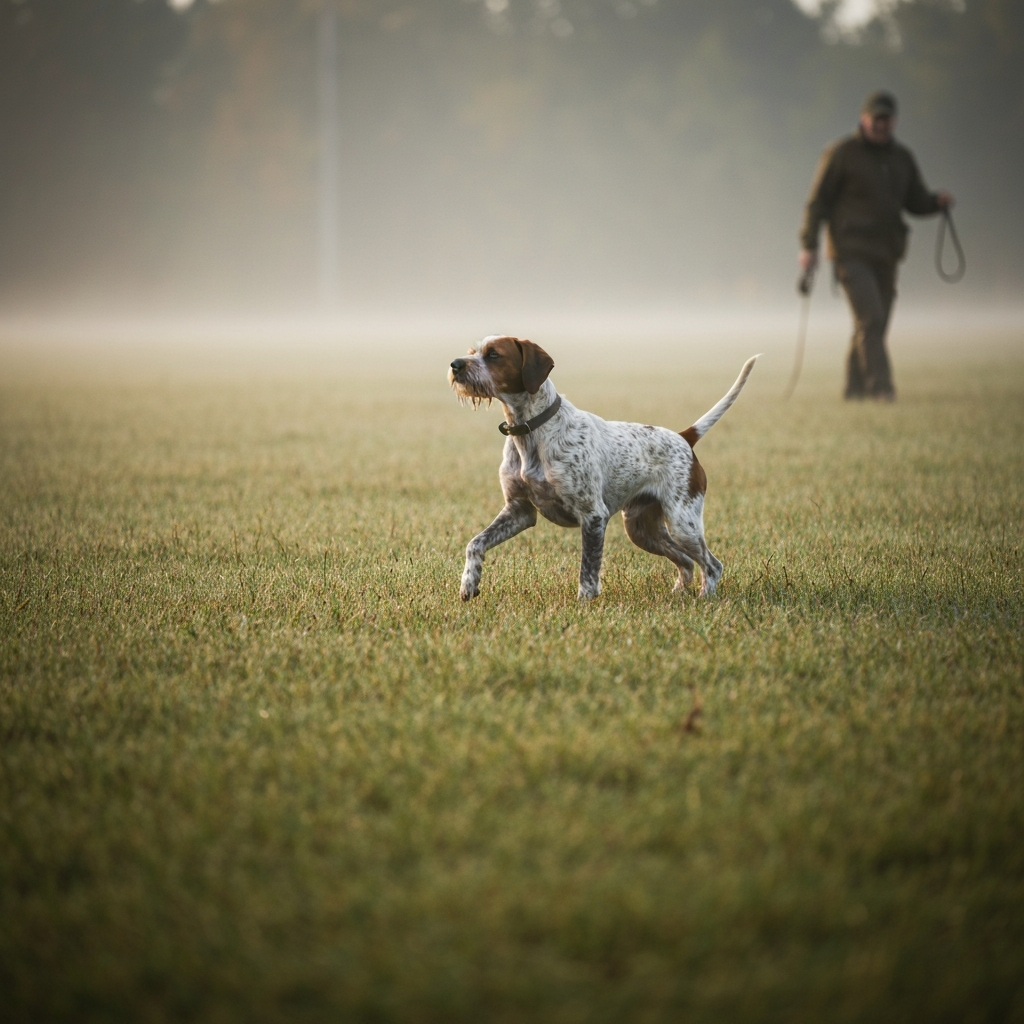
NAVHDA — the North American Versatile Hunting Dog Association — runs the most credible evaluation system for versatile hunting breeds in North America. It’s the benchmark serious breeders aim for, and understanding how it works helps you ask the right questions.
The Natural Ability test is for dogs under 16 months. It evaluates nose, desire, search, pointing instinct, water affinity, and tracking. A Prize I or Prize II score means the dog demonstrated inherited hunting ability — not trained behavior, instincts present from birth. When you’re looking at a breeding pair, those NA scores on the parents tell you something real about what the puppies are likely to carry.
The Utility Prepared test is for finished working dogs. It covers everything the NA does, plus retrieving, drag tracking, and honoring a brace mate’s point. A dog with a UP Prize I is a genuinely proven working animal. Not every reputable breeder will have UP dogs — it takes years and serious commitment — but a breeder actively working toward that standard is telling you where their priorities are.
When you call a breeder, ask for NAVHDA registration numbers for both the sire and the dam. You can search scores yourself on the NAVHDA website. A breeder who gives those numbers without hesitation is showing you their work. One who deflects, or says the dogs hunt great but “aren’t titled,” is having a different conversation with you than the first kind.
Red Flags to Avoid
Some of these are easy to spot. Others are easy to rationalize when you’ve been looking for months and someone finally has a puppy.
Puppies always available. This is the biggest one. WPG litters run small — typically four to seven pups — and a responsible breeder places every one carefully. If they always have availability, you should be asking where all the dogs are going. Volume breeding isn’t about the dogs. It’s about the transaction.
No health documentation. A breeder who mentions OFA testing but can’t produce the actual certificates or lookup numbers is giving you a story, not a record. Legitimate OFA results are publicly searchable. There’s no legitimate reason a reputable breeder can’t share them.
Dogs that don’t hunt and aren’t tested. “We don’t hunt but the dogs have wonderful temperament” means the breeder has shifted their selection pressure away from working ability. For a WPG, that matters. The breed’s instincts are the whole point — and those instincts degrade fast when breeders stop selecting for them.
Evasiveness about parent temperament. Ask direct questions: Is the sire dog-aggressive? How does the dam handle strangers? A good breeder has lived with these animals through a lot of situations and will give you real answers — not PR answers. If you get a polished non-answer, that’s the answer.
Pressure for a deposit before you’ve finished asking questions. Reputable breeders interview buyers. They want to know the dog is going somewhere good. If someone is pushing you to commit before you’re ready, walk away.
How to Find WPGCA-Listed Breeders
Start at wpgca.org and pull up the breeder referral list. It’s not a complete picture of every reputable breeder out there — some good ones aren’t listed — but every breeder on it has agreed to the club’s code of ethics. It’s a reasonable starting point.
NAVHDA chapter contacts are underused for this. Local chapters run training days and tests, and the people involved know who in the region is breeding dogs that actually work. Go to navhda.org, find the closest chapter, and reach out. You’ll get names that never showed up in your Google searches — breeders who spend their weekends in the field, not updating their websites.
Hunt Talk and Bird Dog Forum both have active WPG communities. Before you post, search first. There are years of breeder discussions in both places — firsthand accounts from people who bought puppies and hunted them through multiple seasons. That’s a different category of information than anything a breeder’s own website will give you.
Once you’re in contact with a breeder you’re seriously considering, ask for buyer references — specifically people who got a dog two to four years ago, not six months ago. You want to talk to someone who’s hunted the dog for a full season or two. That conversation will tell you more than any amount of website reading.
The Waitlist Reality — Plan 12 to 24 Months Ahead
A 12-to-24-month waitlist from a reputable WPG breeder is completely normal. Some of the best-regarded names in the breed are booked further out than that. If you find someone with immediate availability, it might mean a buyer fell off their list — that happens. But if immediate availability is their standard state, that’s a signal worth paying attention to.
The wait isn’t dead time. If you can, visit the breeder in person — see how the dogs live, how they interact with people, what the overall environment looks like. Ask to come out on a training day. A breeder who says yes to that is confident in what you’ll see. One who finds reasons to keep you at arm’s length probably isn’t.
Keep evaluating during the wait. If the breeder goes quiet, if something comes up in the community, if new information changes your assessment — you’re not locked in. A deposit should be refundable until the litter is confirmed, and any breeder worth buying from understands that circumstances change. Don’t feel obligated to stick with a list just because time has passed.
The difference between dogs from breeders who hunt their stock, do the health testing, and pursue NAVHDA evaluation versus dogs from untested lines is real and measurable in the field. You’re going to spend 12 or 14 years hunting behind this dog. The wait is worth getting it right.

Stay in the loop
Get the latest griffist updates delivered to your inbox.