The Core Difference No One Mentions First — Range
I’ve owned a griffon for six years and trained alongside Vizsla handlers in NAVHDA events across the upper Midwest. Between forums, breed comparison tables, and kennel club talking points, there’s a lot of noise around these two dogs. What follows is what actually separates them in the field.
My griffon is a male named Birch. He hunts pheasant and woodcock primarily, with duck work mixed in during the early October marshes. My friend and training partner Alex runs a field-bred Vizsla named Ember who is genuinely impressive on open prairie quail. Between the two dogs, I have had a front-row seat to both breeds working real birds in real conditions — and the single most important difference is not the coat, or the energy level, or the trainability scores that every article leads with.
It is hunting range. Full stop.
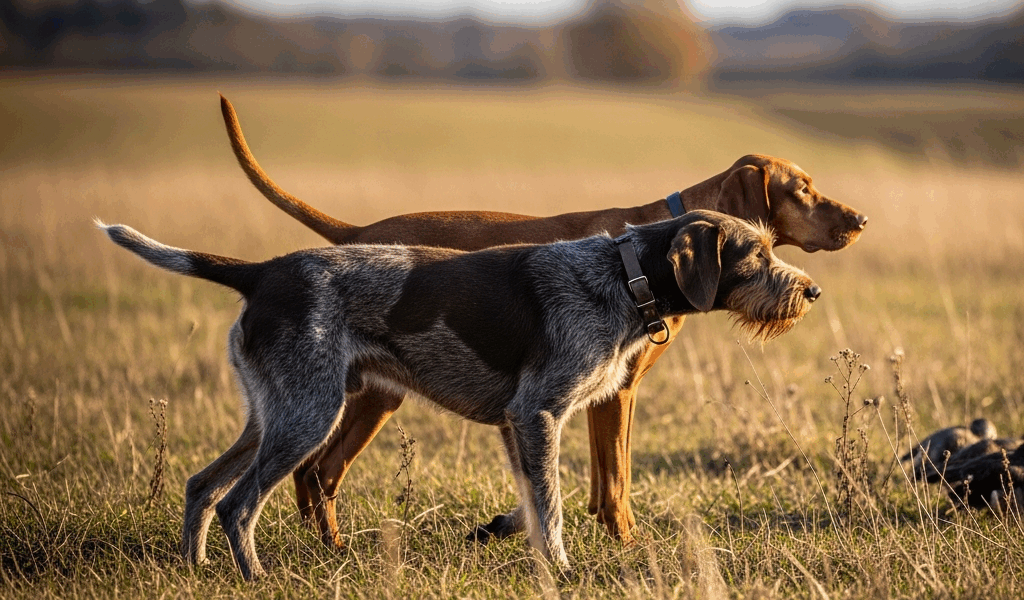
Birch quarters within 30 to 50 yards of the gun. Ember, on a calm day in open stubble, will push out to 100 yards and beyond without blinking. That is not a flaw in either dog — it is by design. But it determines which breed belongs with which hunter in which terrain. Get this wrong and you will spend an entire season frustrated, wondering what went wrong when the answer was baked in from the start.
Hunting Style — Built for Different Ground
Frustrated by versatile hunting dogs that lost contact in the dense cover of European lowlands, Eduard Korthals developed the griffon specifically for the close-working meat hunter on foot. This methodical approach took off several years later and eventually evolved into the breed enthusiasts know and hunt behind today. The dog hunts thick brush, cold marshes, dense timber — all the terrain where you want your dog within eyeshot at all times. Birch checks back frequently and retrieves naturally from both land and water. In heavy Pennsylvania-style pheasant cover, that close range is not a limitation. It is exactly what I need.
The Vizsla is a Hungarian plains dog. It was designed for open fields, rolling grasslands, wide-open prairie birds — quail, chukar, Hungarian partridge. Watching Ember cover an Iowa cornfield stubble is honestly something else. She moves with a speed and efficiency that makes Birch look like he is working in first gear. That same Vizsla in dense creek-bottom pheasant cover, though, is hunting 80 yards into the brush while you are still at the field edge wondering where your dog went.
Both breeds point, both retrieve, both are versatile hunters. But their natural range is different by design, and you need to hunt in terrain that suits the dog’s instincts — not fight against them for a decade.
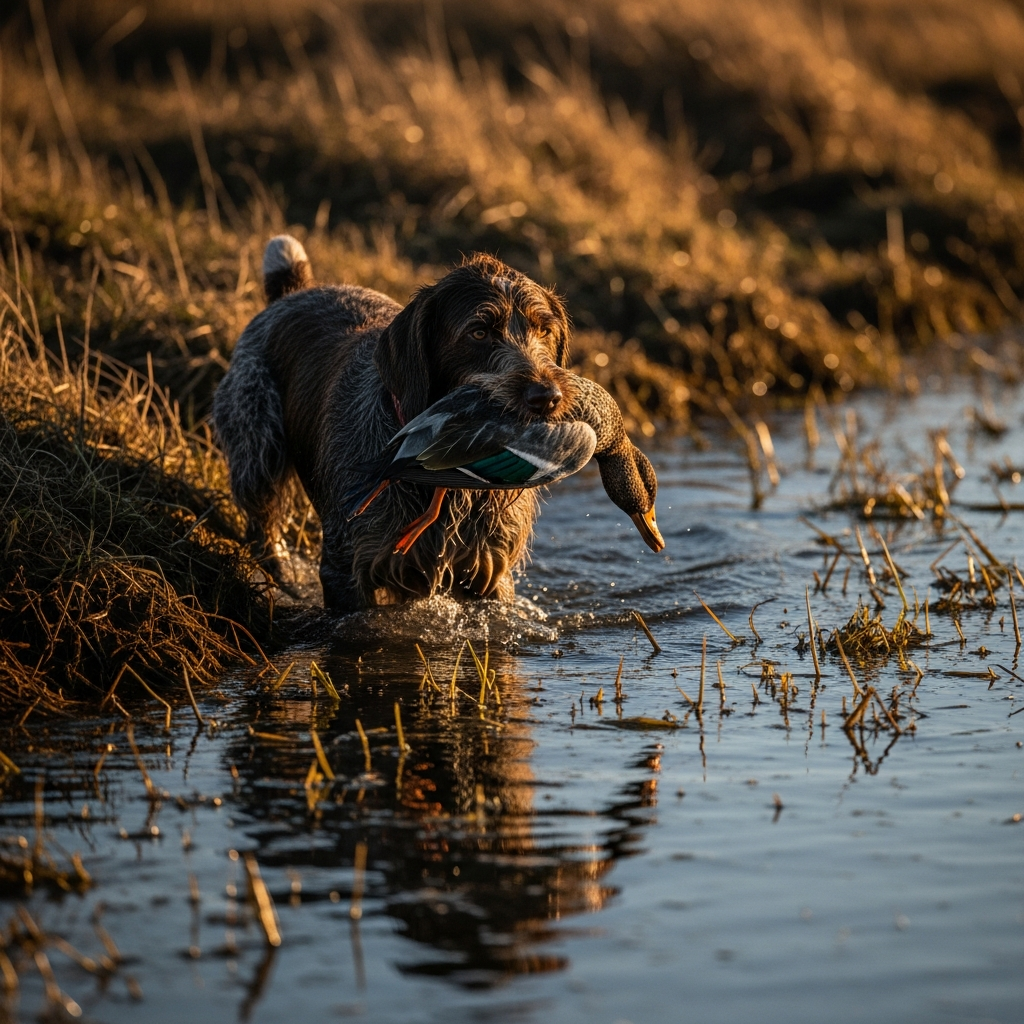
One more hunting difference worth knowing: the griffon is the stronger water dog, and it is not particularly close. Birch carries a dense, protective double coat into 40-degree water and retrieves with genuine enthusiasm. I have watched him do late-season duck retrieves that would make a thinner-coated dog quit. Vizslas can swim and will retrieve from water, but they are not purpose-built for cold-water waterfowl work. If you do any combination upland-and-waterfowl hunting, that matters more than most people realize before their first October morning in a duck blind.
Which Breed Trains More Easily
Probably should have led with this section, honestly — because for a first-time gun dog owner, trainability might matter more than anything else on this list.
Both breeds are highly biddable compared to the spaniels and hounds of the world. But they are biddable in different ways, and the distinction matters in practice.
The griffon is sensitive and eager to please in a way that makes it forgiving to train. Birch reads my body language with embarrassing accuracy — I can correct him with tone alone most of the time. Heavy-handed correction methods backfire hard on this breed. I keep my e-collar at level 6 and rarely use it beyond a vibration reminder. That responsiveness makes the griffon a genuinely good choice for a dedicated first-time gun dog owner willing to put in the work. It is not a push-button dog — no pointing breed is — but it is one of the more accessible versatile breeds to develop.
The Vizsla has higher drive and more intensity. That intensity is an asset in the field — it produces the wide-ranging, fast-working hunting style the breed is known for. But it also means a Vizsla without adequate structure and daily exercise becomes a very energetic problem in the house. Alex runs Ember four miles every morning before work. Every single morning. The Vizsla responds well to training but can challenge first-time owners specifically because of that elevated drive. They need consistent leadership and a real outlet for their energy or they will invent one — and you will not like the one they invent.
As a Family Dog — The Honest Answer
Both breeds are excellent family dogs and generally wonderful with children. I am not going to pretend there is a meaningful safety difference here — there is not.
Where they differ is texture of daily life in the house. Birch, once he gets his exercise, settles readily indoors. He transitions from eager working dog to comfortable couch companion pretty naturally. I am apparently the kind of owner who notices these things, and the shift from field mode to house mode in a griffon is remarkably clean. Vizslas are more velcro — Ember follows Alex from room to room, wants to be physically touching him at all times, and has a higher resting energy indoors that never fully switches off.
Neither is a problem for the right owner. The griffon’s slightly calmer indoor energy might make it easier in a house with toddlers. The Vizsla’s intensity is a better fit for an active family with older kids who can genuinely keep up with the dog’s energy level. Both require real daily exercise — just different amounts of it.
Grooming — Not Even Comparable
This is one area where there is no competition at all, and I say that as someone who has learned to hand strip a wire coat.
The griffon has a double coat — harsh, wiry topcoat over a soft undercoat — that requires hand stripping two to three times per year. Each full strip session takes me about 90 minutes now, though the first time took closer to two and a half hours and looked like a crime scene of dog hair. The coat also needs light maintenance between full sessions. I do a quick finger-pull every couple of weeks to keep things tidy. It is real time. It is real commitment. Take it from me of assuming you can just clip it — clipping ruins the wire texture and the coat grows back soft and wrong.
The Vizsla has a short, smooth, rust-gold coat that sheds moderately and needs essentially no grooming beyond a weekly brush and an occasional wipe-down. If grooming time or cost is a genuine factor in your decision, the Vizsla wins this category outright and it is not close.
That said — the griffon’s coat is also more functional in the field. It provides genuine protection against cold water, briars, and heavy brush that the Vizsla’s short coat simply does not offer. The grooming earns its keep in October cattails.
Which Dog Should You Choose
That’s what makes this comparison endearing to us versatile dog people — both breeds are genuinely outstanding, and the honest answer depends on your terrain and your hunting style.
Choose the Wirehaired Pointing Griffon if:
- You hunt pheasant, woodcock, or waterfowl in heavy cover or cold water
- You want a close-working dog that checks back and hunts with you, not ahead of you
- You are a first-time gun dog owner committed to training
- You want a dog that settles easily indoors after a day in the field
- You are willing to spend time on coat maintenance or budget for grooming
Choose the Vizsla if:
- You hunt open fields — upland birds in grasslands, stubble fields, or open prairie
- You want a wide-ranging dog with speed and drive to cover big ground
- You have gun dog training experience or are working with a professional trainer
- You want essentially zero grooming commitment
- Your family is very active and wants a dog that matches that energy level
Both are outstanding dogs. Neither is the wrong answer in the right situation. But they are built for meaningfully different hunting scenarios, and the hunter who ignores that distinction ends up with a perfectly good dog in the wrong terrain — which is a waste of a good dog and a good season.



Stay in the loop
Get the latest griffist updates delivered to your inbox.