Why Your Griffon Loses Its Mind When You Leave — And What Actually Fixes It
I adopted a Brussels Griffon named Pepper and spent the first three months genuinely worried the neighbors were going to file a noise complaint. What follows is everything I figured out about this particular brand of canine meltdown — the hard way, mostly.
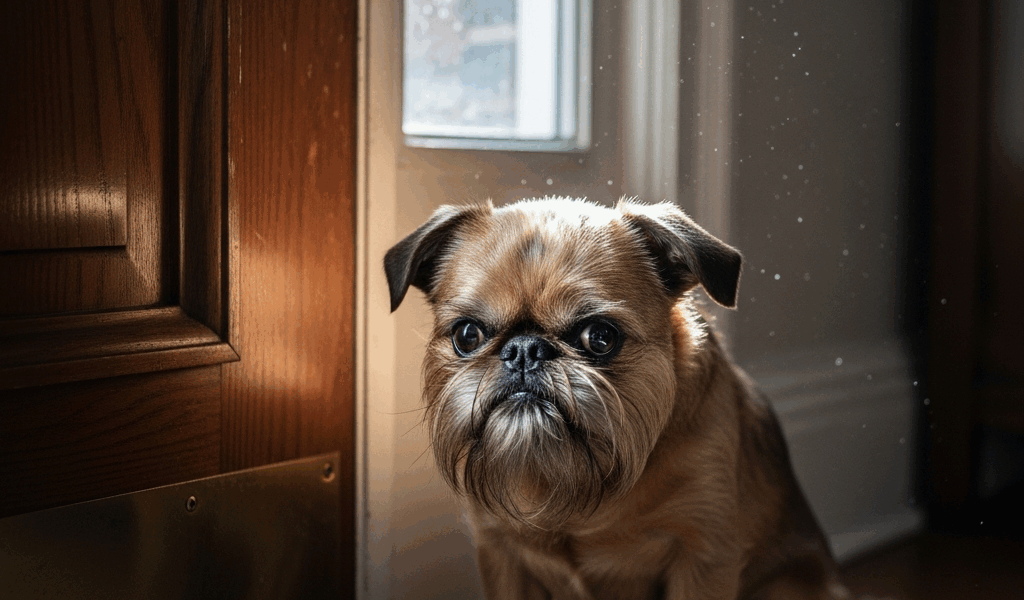
The first time I left Pepper alone for a quick grocery run, I came home to a dog who had scratched the paint off the inside of the front door and barked so hard she was hoarse. My downstairs neighbor left a note. Not a friendly one. I sat on the kitchen floor with Pepper in my lap and googled “brussels griffon separation anxiety” on my phone, feeling like I had already failed at dog ownership three weeks in.
Here is what took me a while to understand: this is not a training failure. It is almost a design feature of the breed. And there are real things you can do that actually work — along with a few well-meaning approaches that actively make it worse.
Why Brussels Griffons Are Wired This Way
But what is a Brussels Griffon, really, in terms of its relationship to humans? In essence, it is a companion dog bred for Belgian coachmen whose literal job description was to stay with their person all day, every day. But it is much more than that — that wiring runs deep and does not switch off because you need to go to work.
The strong bonding instinct that makes griffons such wonderful companions — the reason Pepper follows me from room to room, sleeps against my leg, and perks up at the sound of my car in the driveway — is the same trait that makes being alone genuinely distressing for many of them. If your griffon has separation anxiety, it is not because you trained them wrong. It is because you have an extremely bonded, human-focused dog doing exactly what generations of breeding designed it to do.
That said — understanding the cause does not mean living with the consequences. This is manageable with the right approach and realistic expectations about the timeline. Pepper is proof of that, though the timeline was longer than any article prepared me for.
Real Anxiety vs Standard Griffon Drama
Probably should have led with this section, honestly — because the distinction matters and I wasted weeks treating normal griffon theatrics like a crisis.
Brussels Griffons are theatrical by nature. Pepper gives me the saddest eyes on earth when I pick up my keys. A brief moment of protest at the door — some whining, maybe a single bark — is completely normal griffon behavior and does not indicate separation anxiety. What you are looking for is distress that continues well after you have left.
Signs of real separation anxiety that I eventually learned to distinguish:
- Destructive behavior that starts within the first five minutes of departure — not boredom destruction that happens after hours alone
- Continuous barking, howling, or crying that goes on for twenty minutes or more after you leave
- Refusing to eat food or treats they would normally take immediately when left alone
- Self-injurious behavior — excessive licking, scratching, or escape attempts that leave marks
- Physiological signs when you are preparing to leave — panting, drooling, trembling before you have even picked up your keys
If your griffon whines for two minutes and then settles down on the couch, that is normal. If they are still going thirty minutes later and the door frame has new teeth marks, that is anxiety worth addressing. I happen to be bad at distinguishing these early on, and Pepper’s door frame paid the price.
The Graduated Departure Protocol — What Actually Moved the Needle
This is the approach that worked for Pepper and me. It is slow, which is frustrating when your neighbor is leaving increasingly pointed notes, but it works by systematically teaching your dog that departures are temporary and non-threatening. Skipping steps does not save time — it resets progress. Learn from my screw-up of jumping ahead because things seemed fine for two days.
Week 1 — Building tolerance from zero. Start with 30-second departures. Walk out, close the door, stand outside for 30 seconds, come back in calmly. No big greeting, no drama. Do this multiple times per day. Extend by 30 seconds every two days. By the end of week one, aim for 2 to 3 minutes without distress signals.
Week 2 — Reaching five minutes. Continue extending in 30 to 60 second increments. Do not jump ahead even if your dog seems fine. The point is that they learn the pattern — you leave, you come back, nothing bad happens — not just that they tolerate one slightly longer absence.
Weeks 3 and 4 — Building toward 30 minutes. Once your griffon is solid at five minutes without distress signals, you can extend more quickly — adding five minutes at a time. Pepper reached 30 minutes of calm alone time by the end of week four. Some dogs get there faster. Some take six weeks. Both are normal for this breed.
A critical piece that I stumbled onto by accident: give your dog something genuinely good only when you leave. A frozen Kong stuffed with peanut butter is the classic tool, and it works for a reason. The Kong comes out when you are leaving, it goes away when you return. This creates an actual positive association with departures — Pepper eventually started trotting toward her spot when she saw the Kong come out, because it meant something good was about to happen. That behavioral flip was the moment I knew the protocol was working.
What Makes It Worse — Mistakes I Made Before I Understood
Emotional departures. Long goodbyes, excessive reassurance, the guilty face you make while telling them you will be back soon. I did all of this. Every single time. It communicates that the departure is a big deal worth being anxious about. Leave matter-of-factly. No ceremony. This felt cold to me at first, but Pepper responded better to boring exits than emotional ones within a week.
Returning when they are vocalizing. If you come back through the door because your dog is crying, you have just trained your dog that crying brings you back. Wait for a pause — even a brief one — before entering. This one was brutal for me. Standing outside my own front door listening to Pepper cry while I waited for a three-second gap of silence felt genuinely cruel. It was necessary.
Punishing anxious behavior. Coming home to destruction and scolding your dog teaches nothing except that your return is also stressful. They cannot connect the punishment to something that happened hours ago. It increases anxiety. I snapped at Pepper once after the door frame incident. She hid under the bed for the rest of the evening. Never again.
Crating an untrained dog. A crate is not a cure for separation anxiety — and for a dog with real anxiety, being crated without proper crate training can escalate distress significantly. Crate training is a separate process that needs to happen before the crate becomes a useful management tool.
Going from zero to eight hours. If your dog cannot handle thirty minutes, jumping to a full workday is too much. The protocol requires gradual extension. I learned this by failing at it.
Enrichment Tools That Actually Help
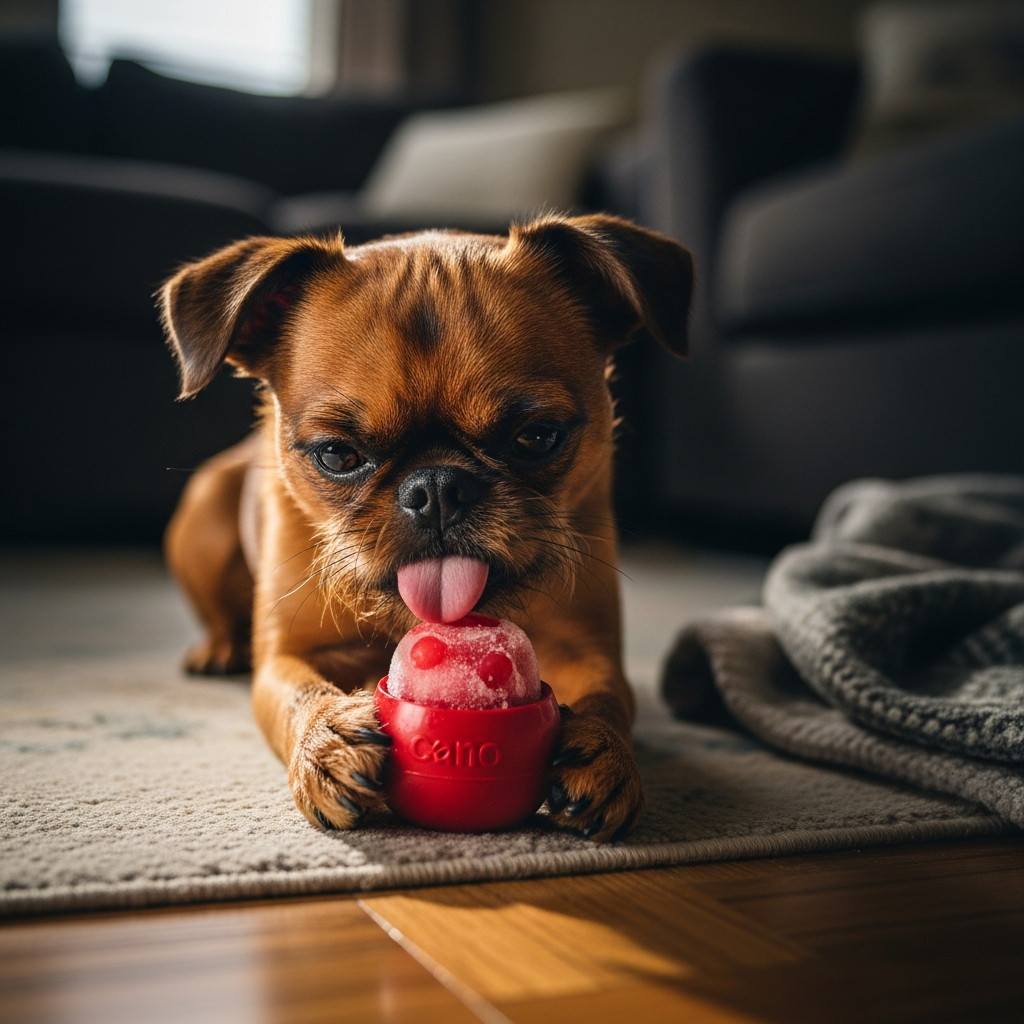
Frozen Kong with peanut butter: The gold standard for departure enrichment. I prepare a batch of six on Sunday nights, freeze them, and deploy one each time I leave. The freezing makes it last longer and the licking is inherently self-soothing. Use only real peanut butter — check the label for xylitol and avoid anything that contains it. I use the Smucker’s Natural at about $4 a jar and it lasts two weeks.
Snuffle mat: Good for pre-departure engagement. Scatter kibble in it before you leave so the dog is already occupied and nose-working as you walk out the door. Pepper gets about ten minutes of genuine focus from a good snuffle mat scatter.
Through a Dog’s Ear music: A specific line of music composed and tested for calming dogs. It has real research behind it — not just the idea that classical music is generally nice. The arrangements are designed to reduce physiological arousal. Worth having on when you leave. I run it through a cheap Bluetooth speaker in the living room.
Adaptil pheromone diffuser: A synthetic version of the appeasing pheromone mother dogs produce. Evidence is moderate but genuinely positive — not a silver bullet, but it does reduce baseline anxiety for many dogs. I plugged one in where Pepper spends most of her alone time. Hard to say definitively if it helped or if the protocol was just working, but it certainly did not hurt.
What does not consistently help: leaving the TV on randomly — unpredictable sounds can be stimulating rather than calming. Getting another dog for company — helps some dogs, does nothing for others, and now you have two dogs to manage. A two-way camera where you talk to your dog — your voice appearing from nowhere can be more alarming than comforting. I tried the camera thing with Pepper. She spent ten minutes looking for me behind the bookshelf. Not helpful.
When to Bring in Professional Help
If your dog cannot tolerate fifteen minutes of alone time after six to eight weeks of consistent graduated departure work, bring in professional help. A certified applied animal behaviorist or a veterinary behaviorist is worth the investment for severe cases — not a general trainer, who may not have specific anxiety protocol training.
Have the medication conversation with your vet. Fluoxetine — Prozac — is frequently prescribed for dogs with separation anxiety and it is highly effective. It lowers the anxiety baseline enough for the behavioral protocol to actually take hold. Medication is not a permanent crutch or a sign you failed — it is a tool that makes the training work. A dog in full panic mode cannot learn. A dog with reduced anxiety can. Many griffon owners who were skeptical about medication ended up being the strongest advocates for it after seeing the difference in their dog’s quality of life. That’s the part about the griffon community that owners love — the willingness to share what actually worked, without judgment.
This is fixable. It took me about ten weeks with Pepper, a frozen Kong budget that my partner still teases me about, and one genuinely difficult conversation with my neighbor. But Brussels Griffons can and do learn to be alone comfortably. The goal is not a dog that does not love you. It is a dog that trusts you will come back.

Stay in the loop
Get the latest griffist updates delivered to your inbox.