At the breeder’s place, you notice the litter doesn’t look uniform. Some puppies have scruffy little beards, coarse wiry coats, faces that look almost theatrical. Others are smooth all over, short-haired, almost sleek. You’d swear they were different breeds. They’re not — Brussels Griffons naturally produce both coat types, sometimes in the same litter. But when it comes to what you’ll actually be doing every week to keep that dog looking decent, the two coats might as well be different breeds.
Two Completely Different Grooming Commitments
Same breed, same personality, same compact size — but the grooming divide between rough and smooth is real. One coat keeps hair off your couch but needs steady attention at home and regular professional visits. The other practically takes care of itself, except for the hair you’ll find absolutely everywhere. Neither one is a free lunch. They just charge you differently.
Which trade-off you can live with says a lot. If your schedule can’t absorb grooming appointments every couple of months, the rough coat will become a source of guilt. If dog hair on dark clothes sends you over the edge, the smooth coat will be a daily frustration. Both are fine dogs. Pick based on the reality of your life, not just which face you find more charming in photos.
Rough Coat Grooming — What It Actually Takes
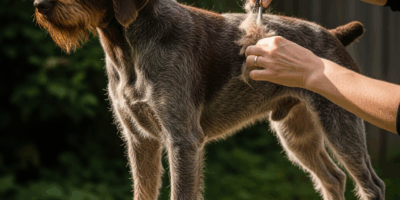
That scruffy Ewok face — the beard, the messy brow, the wiry body fur — is what most people picture when they hear “Brussels Griffon.” Keeping it that way takes work. You’re looking at professional hand stripping every 6 to 8 weeks if you go the grooming salon route, or home maintenance that involves brushing the coat out 2 to 3 times a week yourself.
Hand stripping means pulling out dead hair at the root rather than cutting it. It’s what keeps the coat wiry and rough in texture. Clipping is the faster, cheaper alternative, but it changes things — new growth comes back softer and the coat gradually loses its characteristic texture. If showing your dog or maintaining the correct breed look matters to you, hand stripping is the only way to go. If you just want a clean, manageable pet, clipping is fine. Just understand it’s a different look over time.
There’s a silver lining to the wiry coat: dead hair gets caught up in the texture rather than drifting onto your floors and furniture. You’ll see much less shedding around the house — but that hair is still there, trapped, and it has to come out through brushing and stripping. The beard especially tends to collect food and moisture, so it needs cleaning beyond just coat grooming. Not difficult, just something to stay on top of.
One thing worth knowing: if you book a groomer, make sure they actually know how to hand strip. Plenty of groomers default to clipping because it’s faster and easier. A groomer who doesn’t know the difference won’t tell you — they’ll just clip. Ask explicitly before you hand over your dog.
Smooth Coat Grooming — The Real Shedding Story

The smooth coat is genuinely the low-maintenance version, at least in terms of time and appointments. Short, close to the body, shiny — no beard, no wiry fur, no hand stripping required. A rubber curry comb once or twice a week, a bath every 3 to 4 weeks, and you’re largely done. You can skip the groomer entirely if you want to.
But the smooth coat sheds. Not dramatically — this is a small dog — but constantly. Spring and fall bring heavier cycles. The rest of the year it’s a slower, steady trickle of short fine hairs on clothes, upholstery, and whatever dark outfit you chose for the day. A lint roller stops being optional and starts being infrastructure. You’ll have one by the front door, one at work, one in the car.
People who switch from rough to smooth are often genuinely caught off guard by this. It’s not that the smooth coat sheds more than other breeds — it probably doesn’t. It’s that the rough coat barely sheds at all, and the adjustment takes some getting used to. If you’ve owned a Lab or a beagle, a smooth coat Griffon’s shedding won’t even register. If a rough coat Griffon was your first dog, prepare to change your relationship with furniture.
Do Both Coat Types Have the Same Temperament
Yes — they’re the same dog. Coat type has no bearing on personality. Both rough and smooth Brussels Griffons are intense about their people, prone to separation anxiety that can range from whiny to genuinely disruptive, stubborn enough to make you laugh and swear in the same training session, and convinced they belong in a much bigger body. None of that is tied to whether the dog has a beard.
If a breeder tells you one coat type is calmer or more affectionate, they’re wrong. The coat is a genetic expression — it’s cosmetic, full stop. Both coat types come out of the same litters from the same parents, which is the clearest possible signal that the fur has nothing to do with the dog’s character.
If temperament is a concern for you — and for a lot of people, the separation anxiety issue is the one that warrants real research before committing to the breed — look into Brussels Griffons generally. That part doesn’t change with the coat.
Which Coat Type Is Harder to Find From Breeders
Rough coat gets more visibility. It’s the look that shows up in breed photos, advertisements, and basically every time someone posts a Brussels Griffon online. That can make smooth coat feel rare or harder to find. It isn’t. Responsible breeders produce both coat types, and since both can appear in the same litter, the smooth coat isn’t some specialty variant.
If you want a smooth coat specifically, say so upfront when you contact breeders. Many waiting lists default to rough coat simply because buyers don’t specify otherwise. It’s not that smooth coats are harder to come by — most people just never think to ask.
Which Coat Type Should You Choose
Rough coat is the right call if keeping hair off your furniture and clothes matters more to you than keeping a grooming schedule. The commitment is real — you’re either paying for professional hand stripping every couple of months, or doing consistent home maintenance yourself. But your couch stays relatively clean, and your black shirts stay wearable.
Smooth coat is the right call if you’d rather skip grooming appointments entirely and deal with a simpler maintenance routine. You’ll earn that simplicity with daily lint rolling and a steady acceptance that short dog hair is now part of your wardrobe. Not a dealbreaker for most people — just something to go in knowing.
If you’re genuinely undecided, try to meet both coat types in person before committing. The rough coat’s beard looks different in person than it does in photos — more lived-in, less groomed. The smooth coat is often sleeker than people expect from a toy breed. Either way, you’re getting the same Brussels Griffon underneath — opinionated, velcro, and absolutely certain you belong to them.

Stay in the loop
Get the latest griffist updates delivered to your inbox.