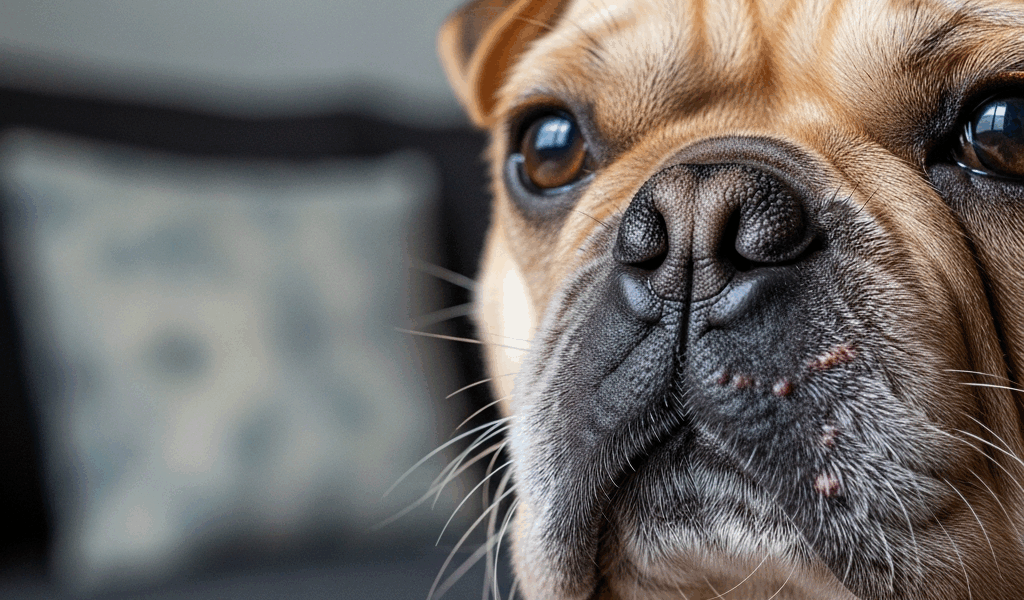
What Griffon Skin Problems Usually Look Like
Brussels Griffon skin problems have gotten complicated with all the conflicting advice flying around online. As someone who’s owned a Griffon for going on six years now, I’ve learned pretty much everything there is to know about this subject. Today, I’ll share it all with you.
My Brussels Griffon, Rusty, had his first skin issue at around two years old — and I nearly missed it entirely. The early signs are deceptively subtle. That wiry, dense coat hides a lot. What looks like normal breed texture is actually concealing some real problems underneath, and most owners don’t catch it until things have already escalated.
The first thing I noticed was faint redness creeping into the skin folds around his nose rope. Looked almost like natural pigmentation. Then came tiny crusty patches under his chin — barely visible unless I parted his facial hair and leaned in close with decent lighting. He started scratching at his face more than usual. Not frantic scratching. Just enough that I caught him doing it three or four times a day and thought, hm.
Small patches of hair loss followed. Not dramatic bald spots — just areas where his coat looked thinner, mostly on his belly and the inner creases of his legs. That’s what finally made me actually look at what was going on beneath all that fur.
Brussels Griffons are structurally different from other small breeds. But what is brachycephalic anatomy, really? In essence, it’s a flat-faced skull structure with compressed nasal passages and pronounced facial folds. But it’s much more than that — it fundamentally changes how skin sits on the face, how moisture moves, and where bacteria find places to set up camp. More so than a Chihuahua. Definitely more than a standard terrier. Those skin folds trap warmth and humidity in ways other breeds simply don’t deal with. Skip the maintenance, and problems develop fast. That’s what makes Griffon ownership uniquely demanding for us enthusiasts.
Skin Fold Irritation and What to Do About It
The nose rope irritation is the signature Brussels Griffon skin problem most owners eventually deal with. So, without further ado, let’s dive into what actually causes it.
That vertical fold running from the nose down to the upper lip is essentially a perfect storm — warm, moist, frequently rubbed against floors and furniture. Moisture plus bacteria plus yeast plus friction equals red, irritated skin. Caught early, it stays localized. Left alone, it spreads and starts smelling. That smell — honestly, you’ll know it immediately — is your signal that yeast has moved in.
I started a daily cleaning routine once I understood what was happening. Here’s what actually works:
- Use a soft microfiber cloth — something like the MagicFiber brand, about $12 for a 12-pack — dampened with warm water only, no soap unless your vet specifically recommends it
- Gently wipe between the nose rope and chin folds once daily, either morning or evening, whichever you’ll actually stick to
- Dry thoroughly with a clean, dry cloth right after — this step matters more than most people realize
- If the area looks particularly angry, apply a vet-approved antifungal powder like Zymox or a 1% hydrocortisone cream, but only after your vet confirms it’s appropriate for your specific dog
What not to use: human face wash, tea tree oil, apple cider vinegar rinses, anything scented. I tried the vinegar approach because some forum post made it sound reasonable. Don’t make my mistake. Rusty’s redness doubled within three days. Those sensitive facial tissues react badly to acidic rinses, and I spent two extra weeks just getting back to baseline.
Most fold irritation clears in about a week of consistent cleaning. Two weeks in with no improvement — or if the redness is spreading, weeping, or developing an odor — that’s when you call your vet. Untreated fold infections in brachycephalic breeds move fast. What looks like minor irritation on Monday can be a legitimate dermatitis or fungal infection by Friday. I’ve seen it happen with Rusty. It’s not slow.
Allergies That Show Up on the Skin
Fold irritation isn’t always the culprit. Environmental and food allergies are the second major cause of skin problems in Griffons — and they look noticeably different from fold irritation, once you know what you’re looking for.
With allergies, the itching is widespread rather than localized. Rusty started licking his paws obsessively — we’re talking 20-minute sessions after walks. His belly turned red in patches. His ears got pink and warm to the touch. The itching came in waves, worse in the evenings, worse after certain meals, worse every spring and fall without fail.
Food allergies in Griffons frequently point to chicken, wheat, or beef. Environmental triggers vary but commonly include grass pollen, dust mites, and mold. The skin symptoms are your first visible signal that something systemic is happening internally.
Before spending $300 to $500 on allergy testing, run a simple food elimination trial at home first. Switch to a limited-ingredient diet for four to six weeks — something like a venison and sweet potato formula from Purina Pro Plan Sensitive Skin or Instinct Raw Boost — and track whether the itching subsides. Keep a simple notes app log: what he ate, when the scratching happened, severity on a 1-to-10 scale. That data matters enormously when you finally do see a vet, because you’ll walk in with actual evidence instead of vague descriptions.
Environmental allergies are trickier because you can’t eliminate spring pollen from existence. You can, however, wipe his paws after every walk, bathe him weekly during high-allergen seasons using something gentle like Burt’s Bees Hypoallergenic Shampoo, and keep his sleeping area vacuumed and washed regularly. Noticeable difference. Not a cure, but noticeable.
When to Stop Home Treatment and See a Vet
Probably should have opened with this section, honestly.
Knowing when to stop playing veterinarian at home is genuinely crucial with this breed. Clear signals that home care has hit its limit: redness spreading beyond the fold area, skin that’s weeping or oozing, visible open sores, a strong smell coming from the affected area, or a dog who’s obviously uncomfortable — constant licking, restless sleep, behavioral changes you don’t recognize.
Watch for systemic signs too. Lethargy, warm ears, general malaise alongside skin issues — that’s a same-day call to your vet. Not a wait-and-see situation. Not a “I’ll check tomorrow.” Same day.
In brachycephalic breeds, skin infections escalate on a compressed timeline. That fold irritation looking minor on day three can become a full dermatitis requiring oral antibiotics by day ten. Your vet can culture the affected area — takes about 3 to 5 days for results — to identify exactly what’s causing the problem, whether that’s bacteria, yeast, or both simultaneously. A typical visit runs $150 to $300 plus medication costs. Getting ahead of it saves real money. More importantly, it saves your dog weeks of discomfort.
Preventing Skin Problems Before They Start
Most Griffon skin problems are preventable. Once I locked in a consistent routine, Rusty’s issues nearly disappeared entirely. I’m apparently a creature of habit — and that consistency works for me while sporadic care never did.
Daily fold cleaning is non-negotiable. I do it every morning while Rusty is still half-asleep and cooperative. Takes maybe two minutes. During humid summer months or after he’s been tromping through wet grass, a second cleaning in the evening helps noticeably.
Dry him thoroughly after baths and rain — at least if you want to avoid moisture sitting in those folds and feeding bacterial growth. I use a MagicFiber microfiber towel and specifically work between and under each fold, not just pat his head and call it done. That distinction matters.
Feed a high-quality diet with minimal fillers. The better his nutrition, the stronger his skin barrier function. It’s not a miracle solution — but over months, it makes a measurable difference in how reactive his skin is to environmental triggers.
Check his skin during every grooming session. This becomes automatic fast. While brushing out his coat, feel for bumps, hot spots, or patches of unusual heat and redness. Early detection changes the entire trajectory of how a problem develops.
Most Brussels Griffon skin problems are manageable once you understand what you’re dealing with. They’re not a reflection of poor ownership — they’re just part of responsible Griffon life. That’s what makes the breed endearing to us owners: the extra attention they require builds a kind of daily connection you don’t get with lower-maintenance dogs. Catch problems early, clean consistently, know when a vet trip is necessary. That’s the full approach. It works.


Stay in the loop
Get the latest griffist updates delivered to your inbox.