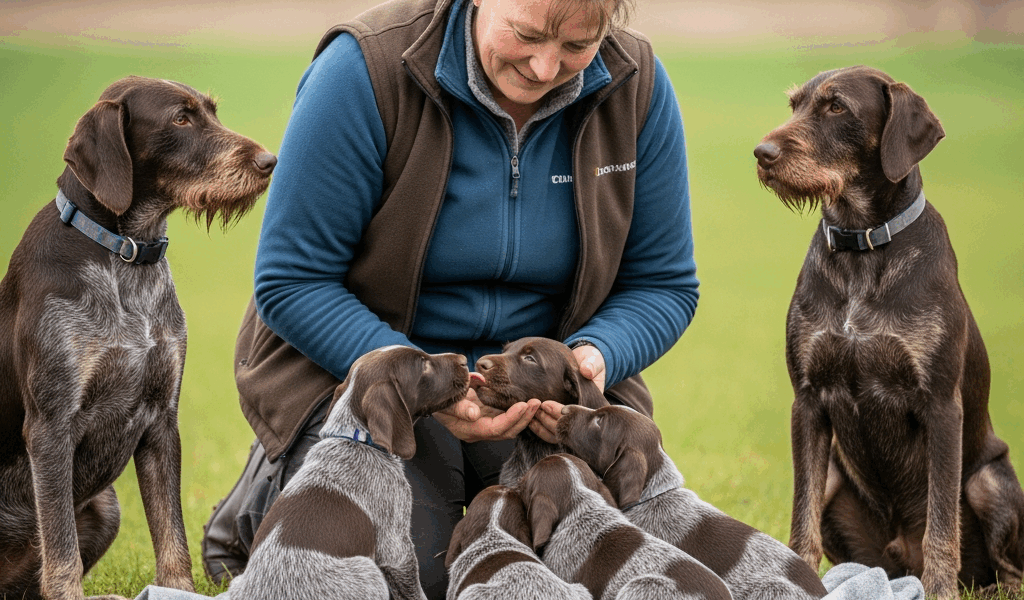
Wirehaired Pointing Griffon Breeders — How to Find a Reputable One
I spent the better part of eight months navigating this process. Puppy mills dressed up with slick websites. Backyard operations hiding behind enthusiastic testimonials. Classified ads that look legitimate until you start asking the right questions. I came in assuming I’d spend a weekend Googling, make a few calls, have a puppy by spring. That was naive.
This isn’t a ranked kennel list. It’s a buyer’s framework — the actual criteria serious griffon people use before they ever pick up the phone.
What Makes a Wirehaired Pointing Griffon Breeder Reputable
Five things separate a real WPG program from everything else. Miss even one and you’ve got a genuine red flag about how seriously someone takes this breed.
Health Testing — The Baseline
Health testing means OFA hip and elbow evaluations, a CAER eye exam conducted by a board-certified ophthalmologist, and a cardiac evaluation. This is the minimum standard set by the Wirehaired Pointing Griffon Club of America, and breeders who skip it are cutting corners on the foundation of everything else.
OFA hip reads typically run $35 to $75 depending on your vet and region. The cost is irrelevant. Any breeder who tells you health testing is “too expensive” is someone you walk away from immediately. Every result should be publicly verifiable at ofa.org — that’s the key part. Ask for the OFA registration number. Look it up yourself. A breeder who says their dogs are “healthy” but can’t hand you a number isn’t giving you information.
Field Performance — The Differentiator
Health-tested dogs who’ve never worked a field aren’t proven hunting dogs. A WPG from a program where breeding dogs are actively hunted and tested is a fundamentally different animal than one from a kennel chasing conformation ribbons. Reputable WPG breeders hunt their dogs — real hunting, with real birds, in real cover. They know what their dogs actually do when there’s a pheasant in the grass forty yards out. Field performance is evidence instead of promises.
WPGCA Membership and Breeder Referral
The Wirehaired Pointing Griffon Club of America keeps a breeder referral list. Membership isn’t a guarantee — it’s a floor. Breeders on that list have agreed to the club’s code of ethics, which covers health testing and field performance standards.
A Questionnaire and Selective Placement
Every reputable WPG breeder I’ve talked to asked me more questions than I asked them. Hunting setup, living situation, experience with dogs, kids in the house, training commitment. A breeder who sells to anyone with a deposit isn’t selecting for outcomes. The best programs are genuinely matching puppies to homes, sometimes pointing buyers toward a different litter or a completely different breeder if the fit isn’t right.
The NAVHDA Test — Why It Matters for Hunting Dog Buyers
This is the single most important thing to understand when evaluating WPG breeders, and most first-time buyers have never heard of it.
NAVHDA stands for North American Versatile Hunting Dog Association. They run standardized field evaluations for versatile hunting breeds — dogs like the griffon that are expected to point, retrieve, and track. Except NAVHDA is measuring real hunting performance in real field conditions, not ring athleticism.
Natural Ability Test
The Natural Ability test is for dogs 16 months and under. It evaluates four core things: nose, search, water, and cooperation — scored 0 to 4 in each category, with a prize system (Prize I, Prize II, Prize III) based on the combined result. A dog scoring Prize I in Natural Ability at 12 months old is demonstrating exceptional inherited hunting instinct before serious training has even started. When a WPG breeder lists NA Prize I scores for their breeding dogs, that’s documented, independently evaluated information about the genetic foundation they’re working from.
Utility Prepared Test
The Utility Prepared test is the advanced evaluation that separates serious breeding programs from recreational ones. UT tests require a dog to demonstrate a full range of field skills: steady to wing and shot, tracking wounded game, retrieving from land and water, working distance from the handler. A UT Prize I is among the highest credentials a versatile hunting dog can hold.
I spent two hours on the NAVHDA website one Tuesday night going through test descriptions with a cup of coffee going cold beside me before I actually understood what I was looking at in litter announcements. When you see “Sire: NA Prize I (112), UT Prize II” on a breeder’s page, you’ll know exactly what that means and why it matters.
A WPG breeder who doesn’t test in NAVHDA evaluations isn’t producing proven hunting dogs. Their dogs might hunt fine. But there’s no independent, standardized evidence of it.
Red Flags to Avoid
The WPG community is small. Red-flag breeders are known within it.
- Puppies always available with no waitlist. A legitimate WPG program produces one or two litters per year, sometimes fewer. Puppies immediately available, litters rolling continuously — that’s volume breeding.
- No health test documentation. Not “I haven’t uploaded it yet.” No OFA numbers, no CAER certificates, nothing verifiable. Walk away.
- Dogs that don’t hunt or haven’t been NAVHDA tested. If the breeding dogs have never been independently evaluated in the field, buyers have nothing concrete to go on.
- Evasiveness about parent temperament. WPGs should be confident, affectionate, and biddable. A breeder who deflects questions about dog aggression or calls a parent “a handful” without elaborating is telling you something.
- No references from previous buyers. Established programs have buyers going back years. Ask for three references from past litters.
- Classified ads without club verification. PuppyFind, Craigslist, even some breed-specific classified sites — a WPG listing without a WPGCA connection needs serious independent verification.
I spent two weeks corresponding with a breeder who had gorgeous website photography and glowing testimonials before I thought to look up the parents’ OFA numbers. They weren’t in the database. When I asked, the breeder explained they used a “private vet who didn’t submit to OFA.” That is not how OFA works — submissions go through the owner, not the vet. That conversation ended quickly.
How to Find WPGCA-Listed Breeders
Start at the source. The Wirehaired Pointing Griffon Club of America maintains a breeder referral list on their website, organized by region.
NAVHDA is the best second resource. Regional chapter contacts run tests and training days across the country — they know who’s producing good dogs in your area, and in some cases can introduce you to breeders whose dogs you can actually watch work before you ever fill out a questionnaire.
Gun dog forums are the third channel most buyers overlook. Hunt Talk and Bird Dog Forum both have active griffon communities — real hunters talking candidly about breeders they’ve worked with, including the ones to avoid. Search before you post. Most of the useful information already exists in threads from three years ago.
The Waitlist Reality — Plan 12 to 24 Months Ahead
This is the part that surprises nearly every first-time griffon buyer. A puppy from a reputable WPG program typically means a 12-to-24-month wait, sometimes longer.
That wait isn’t a problem. It’s evidence that the program produces limited litters from health-tested, field-evaluated dogs rather than cranking out puppies on demand.
If you found a WPG breeder online yesterday and can get a puppy next month — that’s the red flag. Right there.
How to Use the Waitlist Period
Contact four or five programs across your region simultaneously. Ask all of them for health test documentation, NAVHDA scores for planned breeding dogs, and references from past buyers. Compare what comes back.
Attend a NAVHDA test as a spectator. Most chapter tests are open to the public, free to watch. I drove 190 miles to observe a test one October Saturday, got there early enough to see the first brace, stayed through the afternoon. Came back knowing more about this breed than three months of online research had taught me.
Getting on multiple waitlists simultaneously is fine — just be honest with breeders about it. Most understand that serious buyers hedge, especially early on. What they don’t appreciate is deposits held on multiple litters with no intention of following through.
The griffon buyers who end up with the best dogs are the ones who treated this like the serious investment it actually is. This dog will be with you for 12 to 14 years. A year of waiting and careful evaluation isn’t a sacrifice.




Stay in the loop
Get the latest griffist updates delivered to your inbox.